
Support That Keeps You Moving
Mobility aids like walkers and canes are crucial tools for seniors or anyone recovering from injury. But using them incorrectly can lead to poor posture, discomfort—or even falls. Let’s understand how to use them the right way for better balance, confidence, and independence.
Why Use a Walker or Cane?
- Improves stability while walking
- Helps distribute weight to reduce joint strain
- Supports recovery from surgery or injury
- Aids in preventing falls
Tip: Use these aids proactively—don’t wait for a fall to happen first.
Choosing the Right Aid
Canes are ideal if:
- You need mild support on one side
- You have minor balance issues or pain in one leg
Walkers are better if:
- You need more stability
- You have weakness in both legs
- You’re recovering from a hip/knee replacement
Canes are ideal if:
- You need mild support on one side
- You have minor balance issues or pain in one leg
Walkers are better if:
- You need more stability
- You have weakness in both legs
- You’re recovering from a hip/knee replacement
Safety Guidelines for Proper Use
For Canes:
- Hold the cane on your stronger side
- Move the cane and the weaker leg forward together
- The top of the cane should be at wrist level when standing
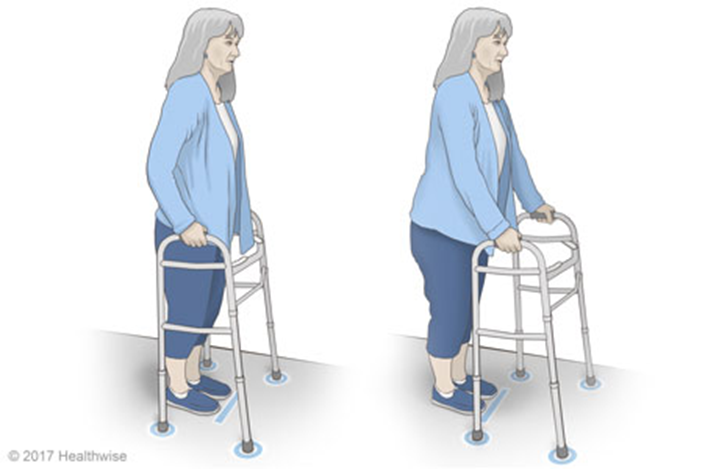
For Walkers:
- Stand inside the frame, not behind it
- Move the walker a step ahead, then step into it
- Keep both hands on the walker for support
- Adjust height so elbows are bent 15–30° when holding handles
Home Safety Tips
- Remove loose rugs and clutter
- Ensure good lighting
- Use non-slip mats in bathrooms
- Install grab bars near steps and toilets
Check Regularly
- Inspect the rubber tips for wear
- Make sure folding parts lock securely
- Adjust height as needed over time
Conclusion
Using a walker or cane the right way can make daily life safer and more comfortable. Whether it’s for short-term recovery or long-term mobility support, choosing and using your aid properly is key to staying active and independent.
Disclaimer: This blog is for general awareness only. Always consult your doctor or physical therapist for personalized guidance before using mobility aids.