
Sitting for long periods with poor posture can place significant strain on the spine, leading to discomfort, stiffness, and long-term orthopedic issues. Understanding these effects can help prevent back and neck problems.
Increased Pressure on Spinal Discs
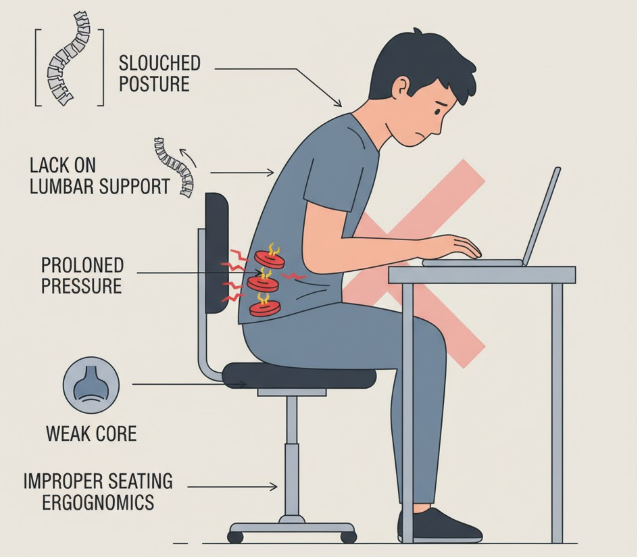
Slouching or leaning forward shifts weight unevenly across the spine, increasing pressure on intervertebral discs. Over time, this can lead to disc degeneration or herniation.
Muscle Strain and Imbalance
Poor posture causes some muscles to overwork while others weaken. This imbalance leads to tension in the neck, shoulders, and lower back, contributing to pain and fatigue.
Altered Spine Alignment
Chronic slouching or rounded shoulders can change the natural curvature of the spine, affecting posture and potentially causing long-term structural changes.
Impact on Overall Health
Spinal misalignment and poor posture can reduce mobility, affect breathing, and even contribute to headaches and fatigue due to muscle tension.
Tips to Improve Sitting Posture
- Sit with your back straight and shoulders relaxed.
- Keep feet flat on the floor and knees at a 90-degree angle.
- Use an ergonomic chair that supports the lower back.
- Take regular breaks to stand, stretch, and move.
- Strengthen core and back muscles to maintain proper posture.
Conclusion
Poor sitting posture can have lasting effects on the spine, muscles, and overall health. Adopting ergonomic habits, stretching regularly, and strengthening supportive muscles can prevent pain and maintain spinal health.
Disclaimer:
This blog is for educational purposes only. It does not replace professional medical advice. Consult a healthcare professional for guidance on posture correction and spinal health.