
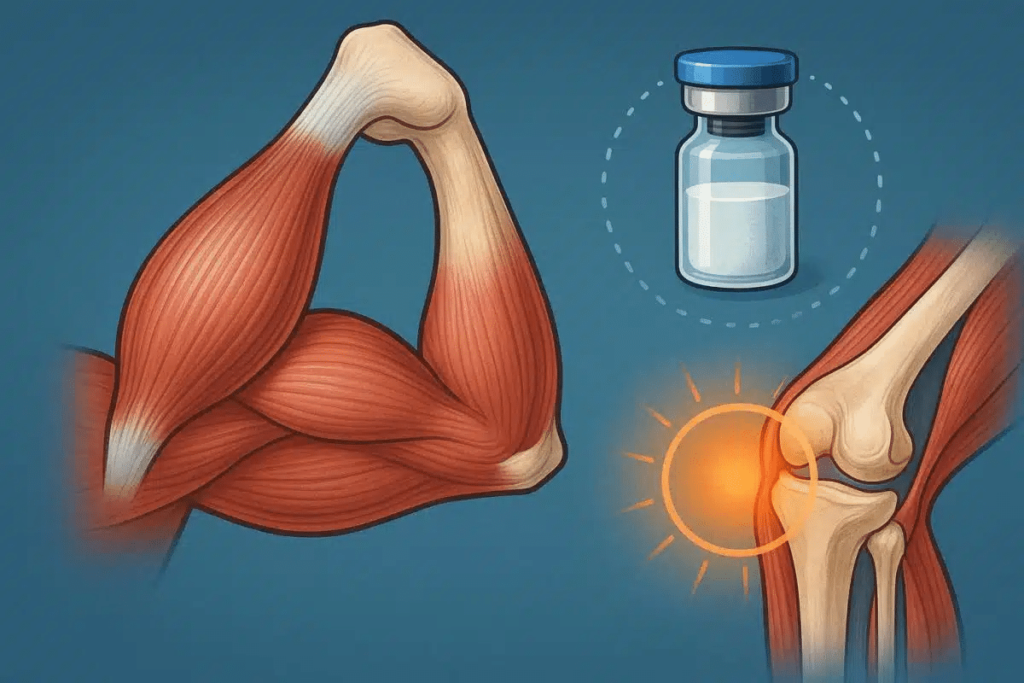
Pain in the musculoskeletal system can originate from muscles or joints, and understanding the difference is important for effective treatment and management.
Muscle Pain (Myalgia)
Muscle pain often feels like soreness, stiffness, or aching. It can result from:
- Overuse or strain during exercise or daily activities
- Muscle tension or poor posture
- Minor injuries or fatigue
Muscle pain usually improves with rest, stretching, and massage, and it may be accompanied by mild swelling or tenderness.
Joint Pain (Arthralgia)
Joint pain is typically felt directly in the joint and may be accompanied by:
- Swelling or warmth
- Stiffness, especially in the morning or after inactivity
- Limited range of motion
Joint pain is often caused by arthritis, ligament or cartilage injuries, or chronic degenerative conditions.
Key Differences
- Location: Muscle pain occurs in the muscle belly; joint pain occurs inside or around the joint.
- Response to Movement: Muscle pain often worsens with activity; joint pain may worsen with both activity and inactivity.
- Accompanying Symptoms: Joint pain may involve swelling, redness, or stiffness; muscle pain rarely does.
Managing Both
- Identify the source of pain through evaluation
- Use targeted therapy for muscles or joints
- Follow prescribed exercise, medication, or rest recommendations
Conclusion
Differentiating between muscle pain and joint pain is essential for effective management. Proper diagnosis and treatment can reduce discomfort and prevent further injury.
Disclaimer:
This blog is intended for educational purposes only. It does not replace professional medical advice. Consult a healthcare professional if you notice persistent pain, numbness, or postural changes.