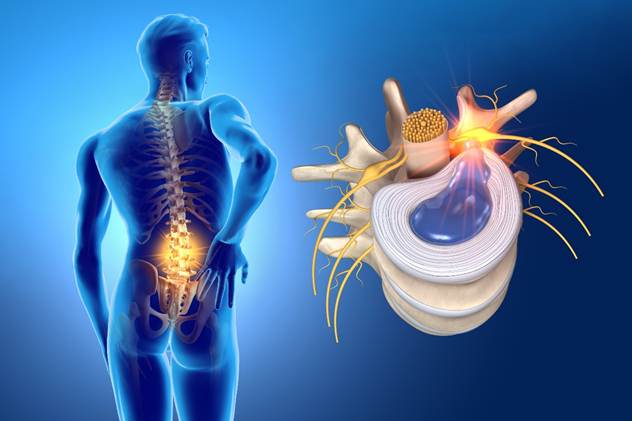
Understanding two commonly confused spinal issues
Many people experience lower back pain and leg discomfort and immediately suspect a “slip disc” or “sciatica.” Although these two conditions can be related, they are not the same. Understanding the difference between a slip disc and sciatica is essential for proper diagnosis, treatment, and long-term relief.
What is a Slip Disc?
Also known as herniated disc or prolapsed disc, a slip disc occurs when one of the soft cushions (discs) between your vertebrae bulges or ruptures out of its normal position.
➤ Causes:
- Lifting heavy objects improperly
- Sudden twisting or injury
- Age-related wear and tear (disc degeneration)
- Sedentary lifestyle or obesity
➤ Symptoms:
- Sharp pain in the lower back or neck
- Numbness or tingling in the arms or legs
- Muscle weakness
- Pain aggravated by movement or coughing
A slip disc can occur anywhere along the spine but is most common in the lower back (lumbar spine).
What is Sciatica?
Sciatica is not a condition but a set of symptoms caused by irritation or compression of the sciatic nerve, which runs from the lower back through the hips and down each leg.
➤ Causes:
- Slip disc pressing on the sciatic nerve
- Spinal stenosis (narrowing of the spinal canal)
- Piriformis syndrome
- Tumors or trauma (rare)
➤ Symptoms:
- Pain radiating from the lower back to the buttock and down one leg
- Burning, shooting, or stabbing pain
- Tingling or “pins and needles” sensation
- Weakness in the affected leg
Sciatica usually affects one side of the body and can range from mild to severe.
How Are They Related?
A slip disc is one of the most common causes of sciatica. When a disc in the lower back herniates, it can compress the sciatic nerve root, triggering sciatica symptoms.
However, not all slip discs cause sciatica, and not all sciatica is caused by a slip disc.
Key Differences at a Glance
| Feature | Slip Disc | Sciatica |
| Definition | Disc bulge/herniation | Nerve pain due to sciatic nerve irritation |
| Cause | Injury, aging, poor posture | Often caused by slip disc, stenosis |
| Location of Pain | Localized to back or neck | Radiates from back to leg |
| Affected Area | Spine area (any part) | Usually one leg |
| Symptom Type | Sharp back pain, numbness | Shooting leg pain, tingling |
| Is It a Disease? | Yes (structural issue) | No (it’s a symptom) |
Diagnosis
Both conditions require:
- Physical examination
- MRI or CT scans
- Neurological tests for reflexes and muscle strength
Treatment Options
For Slip Disc:
- Rest and activity modification
- Physiotherapy
- Painkillers and muscle relaxants
- Surgery (in severe cases)
For Sciatica:
- Ice/heat therapy
- Nerve pain medications
- Stretching exercises
- Epidural steroid injections
- Treating the root cause (like a slip disc)
Can They Be Prevented?
Yes. Here’s how:
- Maintain a healthy posture
- Exercise regularly, especially core strengthening
- Avoid heavy lifting or learn safe lifting techniques
- Take frequent breaks from sitting
- Maintain a healthy weight
Final Thoughts
Understanding the difference between a slip disc and sciatica can help you seek the right treatment early and avoid long-term complications. If you’re experiencing persistent back or leg pain, don’t self-diagnose—consult a medical professional for a proper evaluation.
Disclaimer: This blog is intended for informational purposes only. Always consult a healthcare professional for diagnosis and treatment of any medical condition.