Stay Steady, Stay Safe
Falls are a leading cause of injury in older adults, often resulting in fractures, loss of independence, and hospitalization. The good news? Most falls are preventable. By making small adjustments in lifestyle and environment, seniors can significantly reduce their fall risk.
Why Are Seniors at Higher Risk of Falling?
- Weakened muscles and joints
- Poor balance and coordination
- Low vision or hearing loss
- Medications causing dizziness or drowsiness
- Cluttered or poorly lit living spaces
Practical Tips to Prevent Falls
Make the Home Safer
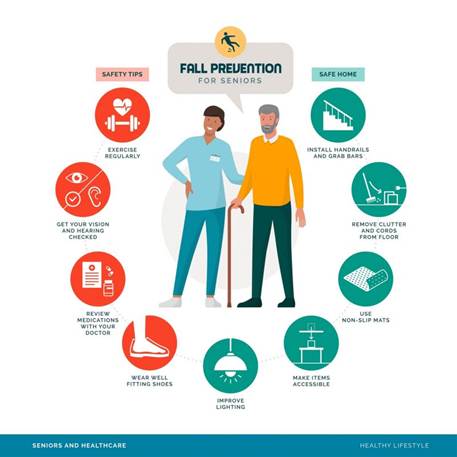
- Remove loose rugs, clutter, and slippery mats
- Install grab bars in bathrooms and near stairs
- Ensure good lighting in all rooms and hallways
- Use non-slip flooring and shoes
Improve Balance and Strength
- Practice gentle exercises like Tai Chi or yoga
- Include leg strengthening workouts to enhance stability
- Consider physical therapy if balance is impaired
Support Bone and Muscle Health
- Eat a balanced diet rich in calcium and vitamin D
- Stay hydrated to avoid dizziness and confusion
Review Medications and Health Conditions
- Consult your doctor to check if any medicines affect balance
- Monitor and manage blood pressure, vision, and hearing
- Use walking aids like canes or walkers if needed
Choose the Right Footwear
- Wear low-heeled, non-slip shoes with good support
- Avoid slippers or flip-flops that increase the risk of tripping
Conclusion
Falls are not an inevitable part of aging. With awareness, preparation, and small lifestyle changes, seniors can remain confident and independent while significantly reducing the chances of falling.
Disclaimer: This blog is for general awareness. Please consult a healthcare provider for personalized fall risk assessments or treatment plans.