
Two Common Bone Conditions, One Clear Guide
Both osteoporosis and osteoarthritis affect the bones and joints, but they are not the same. People often confuse these two conditions, leading to delayed or incorrect treatment. Let’s break down the differences, symptoms, and management options for both.
What is Osteoporosis?
- A condition where bones become weak and brittle
- Often called the “silent disease” because it has no symptoms until a fracture occurs
- Common in postmenopausal women and older adults
Causes:
- Aging
- Hormonal changes
- Low calcium or vitamin D
- Sedentary lifestyle
Symptoms:
- No early signs
- Fractures from minor falls
- Stooped posture
- Loss of height over time
What is Osteoarthritis?
- A degenerative joint disease where cartilage wears down over time
- Affects knees, hips, hands, and spine
- More common with age or joint overuse
Causes:
- Joint wear and tear
- Obesity
- Injuries
- Genetics
Symptoms:
- Joint pain and stiffness
- Swelling around the joint
- Reduced range of motion
- Clicking or grinding sound in joints
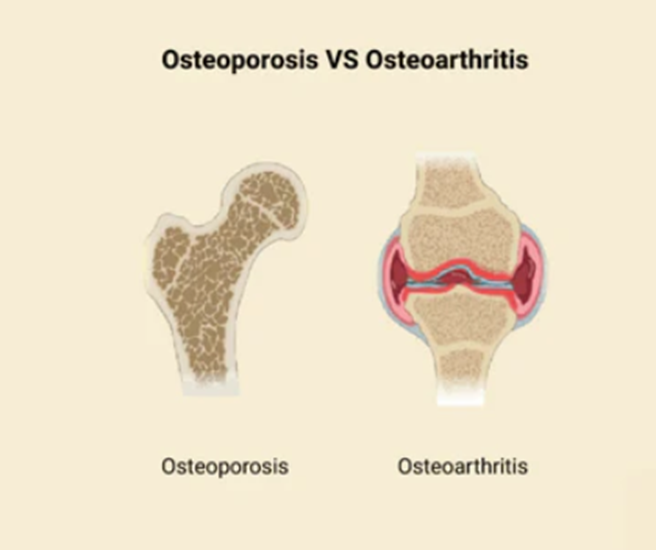
Key Differences at a Glance
| Feature | Osteoporosis | Osteoarthritis |
| Affects | Bones | Joints |
| Cause | Bone density loss | Cartilage breakdown |
| Symptoms | Silent until fracture | Pain, stiffness, swelling |
| Risk Factors | Aging, menopause | Obesity, joint injury |
| Diagnosis | Bone density scan | X-rays, physical exam |
Managing Both Conditions
For Osteoporosis:
- Calcium and Vitamin D supplements
- Weight-bearing exercises
- Bone-strengthening medications
- Avoid smoking and alcohol
For Osteoarthritis:
- Low-impact exercises (e.g., swimming, walking)
- Pain relief with painkillers topical treatments
- Joint supports or braces
- Physical therapy
- In severe cases, joint replacement surgery
Conclusion
Understanding the difference between osteoporosis and osteoarthritis helps you take the right steps toward treatment and prevention. While both impact mobility, their causes and care plans are different—knowing which one you’re dealing with is key.
Disclaimer: This blog is for general awareness only. Please consult a healthcare professional for diagnosis and treatment options suitable for your condition.